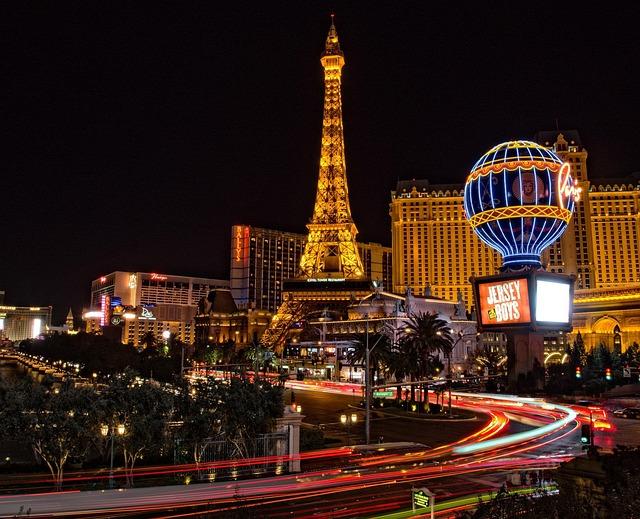
Las Vegas was bracing for what was initially reported as a potential terrorist attack, but authorities have as confirmed the threat was canceled, raising urgent questions about the interplay between political decision-making and emergency preparedness. This unexpected turn of events has sparked a wider debate on whether political considerations may be undermining efforts to effectively safeguard public safety. In this article,The Christian Science Monitor examines the circumstances surrounding the cancellation,the response of local and federal agencies,and the broader implications for security protocols in the United States.
Terrorism Threats and Political Debate in Las Vegas Security Planning
Recent developments in Las Vegas’ security planning reveal a complex interplay between terrorism threat assessments and the influence of political agendas. Officials acknowledged that a planned response drill simulating a “terrorist attack” was unexpectedly scrapped, raising concerns about whether political considerations are overriding necessary preparedness measures. Critics argue that the cancellation reflects a broader unwillingness to confront hard realities, as some leaders appear more focused on controlling narratives than ensuring robust defense mechanisms.
Key issues fueling the debate include:
- Underestimating the evolving nature of terrorism methods targeting large public gatherings.
- Political pressure to minimize perceived threats to maintain economic confidence, especially in tourism-heavy regions.
- Divisions among security agencies regarding resource allocation and operational transparency.
- Public skepticism fueled by mixed messages from elected officials and law enforcement.
| Aspect | Political Impact | Security Concern |
|---|---|---|
| Emergency Drills | Canceled to avoid public alarm | Reduced readiness and response coordination |
| Information Sharing | Restricted to maintain political control | Hindered interagency cooperation |
| Public Communications | Message management emphasized | Misperceptions and complacency risk |
Examining the Impact of Political Disputes on Emergency Preparedness
Political tensions have increasingly undermined emergency preparedness efforts, evident in the recent cancellation of a crucial Las Vegas counter-terrorism exercise. This decision sparked debate over whether partisan disputes are obstructing necessary security measures. Critics argue that such cancellations threaten public safety by delaying response improvements just at a time when potential threats heighten national concern. The clash between political agendas and disaster readiness highlights a troubling trend where bureaucracy overtakes urgent protective actions.
Key consequences of politicized emergency planning include:
- Reduced coordination among local, state, and federal agencies.
- Lowered morale among first responders due to inconsistent support.
- Delayed modernization of protocols in a rapidly evolving threat landscape.
- Decreased public confidence in government preparedness capabilities.
| Aspect | Impact | Urgency Level |
|---|---|---|
| Training Drills | Postponed or Cancelled | High |
| Resource Allocation | Inconsistent | Medium |
| Inter-agency Coordination | Compromised | High |
| Public Dialog | Confusing | Medium |
Assessing Gaps in Coordination Between Agencies and Local Authorities
Recent events have illuminated significant shortcomings in the synchronization between federal agencies and local authorities, highlighting a persistent struggle to unify response strategies amid potential crises. The abrupt cancellation of the planned terror exercise in Las Vegas serves not only as a case study but also as a warning about the risks of fragmented communication channels. Efforts to coordinate intelligence sharing, resource allocation, and operational protocols often fall prey to jurisdictional disputes, budget constraints, and political interference, undermining the overall efficacy of emergency preparedness.
Key issues identified include:
- Lack of standardized communication platforms leading to delays in disseminating critical information.
- Conflicting priorities between agencies focusing on national security and local officials prioritizing community welfare.
- Insufficient joint training exercises exacerbating unfamiliarity with multi-agency protocols.
| Coordination Aspect | Federal Agency | Local Authority | Identified Gap |
|---|---|---|---|
| Communication | FBI, DHS | City Police, Emergency Services | Non-integrated systems |
| Resource Sharing | National Guard | Municipal Fire Dept | Delayed deployment |
| Trainings | Joint Terrorism Task Force | Local SWAT units | Rare joint drills |
Recommendations for Strengthening Counterterrorism Readiness in Urban Centers
Urban centers must adopt a multi-faceted approach to improve resilience against terrorist threats. Collaboration between local law enforcement, federal agencies, and community organizations forms the cornerstone of effective preparedness. Cities should prioritize regular joint training exercises that simulate real-world attack scenarios, ensuring rapid and coordinated response capabilities. Additionally, investing in advanced surveillance and intelligence-sharing technologies can significantly enhance the detection and prevention of potential threats in crowded public spaces.
Equally important is the involvement of citizens in counterterrorism preparedness. Public awareness campaigns that educate residents on recognizing suspicious behavior and protocols for emergency situations can serve as force multipliers. Urban centers should also consider:
- Implementing neighborhood watch programs tailored to urban environments;
- Expanding multilingual communication channels to reach diverse populations;
- Designing public infrastructure with security features that do not impede daily life;
| Key Initiative | Primary Benefit | Estimated Cost |
|---|---|---|
| Integrated Surveillance Systems | Improved threat detection | $2M – $5M |
| Community Training Programs | Increased public vigilance | $200K – $500K |
| Infrastructure Hardening | Reduced vulnerability | $1M – $3M |
Concluding Remarks
As the dust settles on the canceled terrorist attack drill in Las Vegas,questions linger about the balance between political considerations and public safety preparedness. While authorities emphasize the importance of readiness against potential threats,the incident underscores challenges faced when politics intersect with emergency planning. Moving forward, communities and officials alike must navigate these complexities to ensure security is never compromised in the name of political expediency.