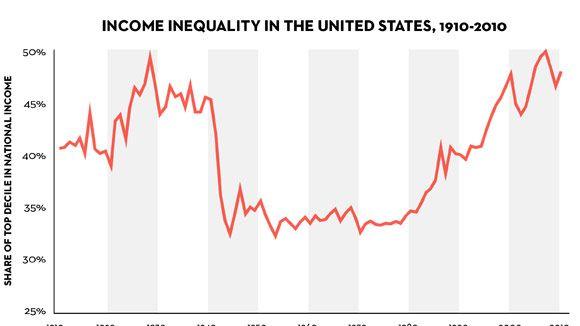
Examining Economic Inequality in the United States: Insights and Solutions from the Council on Foreign Relations
Tracing the Origins of Economic Inequality in the U.S.
The economic chasm in America stems from a complex interplay of historical injustices, systemic structures, and policy decisions that have entrenched disparities over generations. Discriminatory practices such as exclusionary lending and racially biased zoning laws have historically confined minority populations to under-resourced neighborhoods, severely limiting their ability to build wealth. Additionally, unequal access to quality education—from underfunded public schools to limited higher education opportunities—continues to hinder social mobility for many communities.
Moreover, labor market transformations, including the rise of automation and the weakening of labor unions, have diminished the availability of stable, well-paying jobs traditionally held by the middle class. These factors, combined with disparities in healthcare access and tax policies that often favor the wealthy, perpetuate cycles of economic hardship for marginalized groups.
- Historical Housing Discrimination: Practices like redlining have restricted homeownership and wealth accumulation among minority families.
- Educational Resource Gaps: Funding models tied to local property taxes create stark differences in school quality.
- Labor Market Evolution: Declining manufacturing jobs and wage stagnation have eroded middle-class economic security.
| Contributing Factor | Effect on Wealth Distribution | Historical Example |
|---|---|---|
| Discriminatory Housing Policies | Restricted homeownership opportunities for minorities | 1930s Federal Housing Administration redlining maps |
| Unequal Education Funding | Creates disparities in educational outcomes | Reliance on local property taxes for school budgets |
| Shifts in Labor Market | Reduced job security and wage growth | Decline of unionized manufacturing sectors |
Consequences of Wealth Disparities on Society and Governance
The growing concentration of wealth in the hands of a small elite has profound repercussions on social cohesion and political dynamics in the United States.Economic inequality often translates into unequal access to essential services such as healthcare, education, and employment, disproportionately affecting low-income and minority populations. This persistent divide fosters social fragmentation, eroding trust in institutions and fueling tensions that can manifest as civil unrest.
Politically, the disproportionate influence wielded by affluent individuals and corporations skews policymaking, frequently enough sidelining the needs of the broader population. This imbalance contributes to lower political engagement among economically disadvantaged groups,intensifies partisan polarization,and results in legislative stalemates driven by competing elite interests.
- Declining Civic Participation: Economic disenfranchisement leads to voter apathy and reduced community involvement.
- Polarized Political Landscape: Economic interests deepen ideological divides.
- Policy Deadlock: Conflicting priorities among powerful stakeholders hinder effective governance.
| Income Bracket | Level of Political Clout | Effect on Social Stability |
|---|---|---|
| Top 1% | Extensive | Widening socioeconomic rifts |
| Middle 40% | Moderate | Economic strain and uncertainty |
| Bottom 50% | Minimal | Marginalization and social unrest |
Strategies and Policy Recommendations to Narrow the Economic Divide
In response to the escalating economic disparities, experts and policymakers advocate for extensive reforms designed to promote upward mobility and equitable wealth distribution. These initiatives emphasize strengthening social safety nets, improving labor conditions, and expanding access to education and healthcare.
- Tax Policy Overhaul: Implementing more progressive taxation on capital gains and high earners to finance social welfare programs.
- Raising the Minimum Wage: Adjusting the federal minimum wage to reflect current living expenses and reduce poverty.
- Enhancing Educational Opportunities: Boosting funding for community colleges, vocational training, and adult education to equip workers with in-demand skills.
- Supporting Early Childhood Progress: Expanding subsidies for childcare and pre-kindergarten programs to assist working families.
- Improving Healthcare Access: Broadening insurance coverage to alleviate medical debt and economic vulnerability.
Economic models project that combining these policies can significantly reduce income inequality and foster median income growth. For instance, a multifaceted approach integrating tax reform, wage increases, education, childcare, and healthcare initiatives could lower the Gini coefficient—a key measure of inequality—to 0.36, while boosting median incomes by nearly 9%.
| Policy Combination | Estimated Gini Coefficient | Projected Median Income Increase |
|---|---|---|
| Tax Reform + Wage Hike | 0.39 | 6.5% |
| Education + Childcare Support | 0.41 | 5.2% |
| Comprehensive Package* | 0.36 | 8.7% |
*Includes tax reform, wage increase, education funding, childcare subsidies, and healthcare expansion
Collaborative Roles of Government and Business in Reducing Inequality
Addressing the entrenched economic disparities in the U.S. requires a coordinated effort between public institutions and private enterprises. While government action is vital for enacting redistributive policies,regulating markets,and providing social services,the private sector’s role in job creation,innovation,and equitable employment practices is equally crucial.
Successful strategies emphasize partnerships that leverage the strengths of both sectors to foster inclusive economic growth. These include:
- Government-led initiatives to improve education, healthcare, and affordable housing access.
- Corporate commitments to fair wages, workforce development, and diversity in hiring.
- Joint investments in community revitalization and economic opportunity programs.
| Entity | Core Function | Mechanism of Impact |
|---|---|---|
| Government | Policy and Redistribution | Taxation, social welfare programs, labor laws |
| Private Sector | Economic Expansion and Employment | Job creation, corporate social duty initiatives |
| Collaborative Efforts | Shared Responsibility | Public-private partnerships, community investments |
Emerging consensus suggests that only through integrated approaches combining legislative reform with proactive corporate engagement can the U.S. effectively reduce economic inequality and promote enduring, inclusive prosperity.
Conclusion: Navigating the Future of Economic Equity in America
The ongoing discourse on economic inequality, as illuminated by the Council on Foreign Relations, reveals the intricate challenges and broad consequences of wealth disparities in the United States. Crafting effective solutions demands a nuanced understanding of historical contexts, structural barriers, and the interplay between social and political forces.Moving forward, sustained commitment from policymakers, businesses, and communities will be essential to foster a more just and resilient economy that benefits all Americans and strengthens the nation’s global standing.